
Core Differences Between Heavy‑Duty Marquee and Light Weight Marquee
2026-10-01
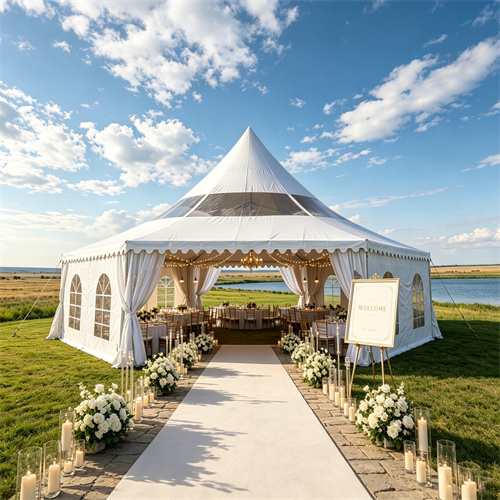
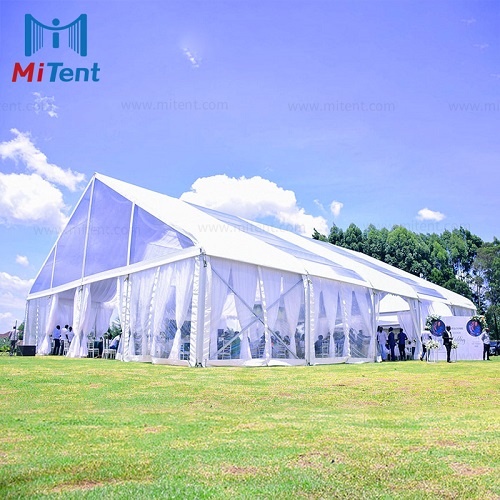
Marquees have become essential temporary‑space alternatives to permanent buildings for a wide range of outdoor applications, including commercial events, industrial warehousing, international exhibitions, wedding ceremonies and recreational gatherings. Two major product lines dominate the market: heavy‑duty marquees and light‑weight marquees. Although both deliver covered outdoor space, they show fundamental differences in frame construction, fabric specification, weather resistance, installation workflow and target applications. Making an informed choice between them helps operators control total‑cost‑of‑ownership and avoid potential safety hazards during on‑site operation.
Frame construction represents the most essential distinction. Heavy‑duty marquees are mainly constructed from thick‑wall high‑strength extruded aluminum alloy profiles. For extra‑heavy‑duty projects, hot‑dip galvanized steel components are adopted to reinforce the whole framework. All connecting joints, corner brackets and base plates are heavily reinforced to maintain high structural rigidity. Such engineering allows clear spans up to dozens of meters.
Additionally, robust load‑bearing capacity enables users to hang heavy accessories such as stage lighting, professional audio systems, LED screens and event trussing directly onto the main frame. By contrast, light‑weight marquees utilize thin‑gauge aluminum alloy or ordinary galvanized steel tubes. These slim‑sized components are engineered for fast assembly rather than heavy loading. Suspending heavy equipment is not permitted, and product designs are generally limited to small‑and‑medium span dimensions.
There is also a clear gap in fabric performance and weather‑proof capability. Heavy‑duty marquees commonly apply heavy‑duty knife‑coated PVC tarpaulin with a weight of 850‑1200g/m² or higher. This material offers outstanding tensile strength and tear resistance, meeting strict wind‑load and snow‑load standards. It can serve as a semi‑permanent outdoor shelter, with a service life ranging from 8 to 15 years even under continuously harsh weather conditions. Light‑weight marquees are covered with comparatively lighter fabric. While basic waterproofing and UV‑protection functions are guaranteed, tear resistance and resistance against heavy snow or violent gusts remain limited. They are designed primarily for short‑term deployment under mild weather and will degrade rapidly if exposed year‑round outdoors.
When it comes to installation, logistics and economic performance, the two categories follow different logic. Light‑weight marquee parts are compact and easy to handle. A team of two to four workers can complete setup and dismantling without heavy machinery. Folded packages occupy little container space, which keeps freight costs low. Both purchase and rental expenses are budget‑friendly, making them ideal for pop‑up campaigns, street markets and short‑term temporary events. Heavy‑duty marquee components are large and weighty. Professional tools and well‑trained installation crews are required for safe erection, resulting in longer construction timelines and higher logistics expenditure. Even though initial investment is higher, these structures can be reused dozens of times, bringing competitive long‑term economic benefits for rental companies and end users.
Their suitable scenarios do not overlap completely. Heavy‑duty marquees are widely deployed for industrial temporary storage, large‑scale trade fairs, mass‑capacity public events, luxury banquets and sports tournaments. Capable of coping with rain, snow and strong wind, they can function as semi‑permanent facilities. Light‑weight marquees fit commercial promotions, outdoor fairs and small‑scale conferences for temporary sunshade and rain shelter. They are strongly discouraged for use during blizzards or typhoon seasons.
In conclusion, heavy‑duty marquees prioritize structural safety, mechanical performance and long‑term durability, whereas light‑weight marquees focus on operational efficiency and rapid field deployment. Buyers should never make decisions based merely on unit price. Service duration, local meteorological conditions, span size and suspended load requirements must all be evaluated comprehensively to select the most suitable marquee solution for specific projects.
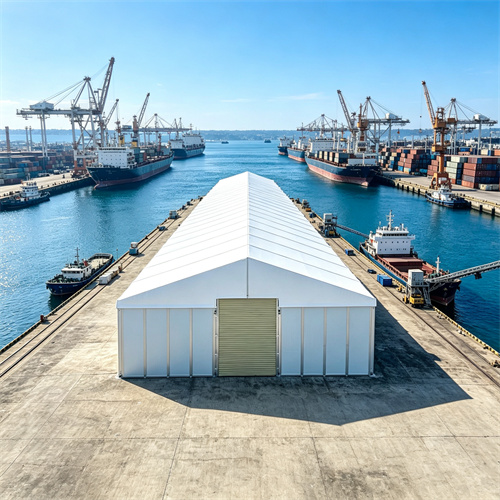 Key Differences Between Warehouse Tent and Traditional Warehouses
 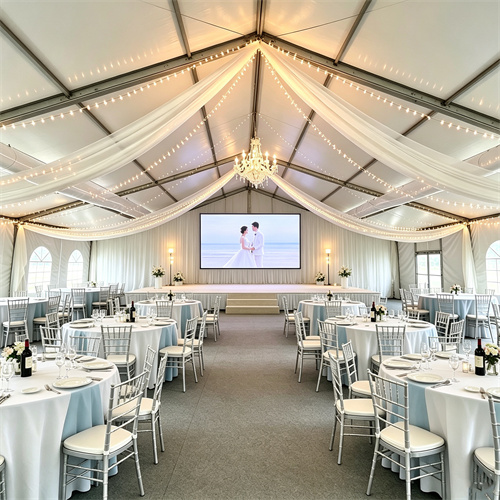 The Relationship Between Marquee Fabric Weight and Service Life
 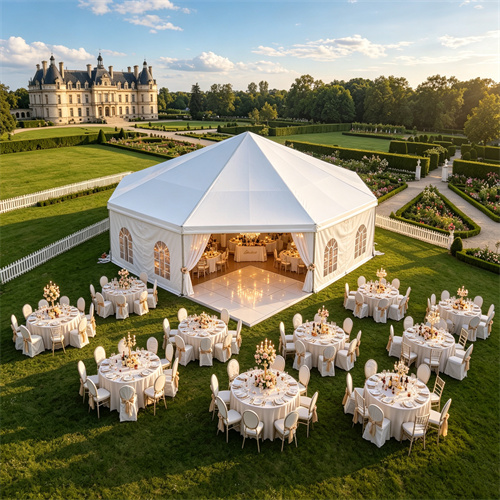 Characteristics and Applications of 850g and 650g PVC Tent Fabric
  How to Keep Tent Cool and Sun-Safe in Summer?
  In Which Occasions Are Double-Decker Tents Suitable for Use?
  Guide to Marquee Tent Usage, Maintenance and Storage Under Various Weather Conditions
  Features and Benefits of Warehouse Tents
  Features and Benefits of Full Transparent Tents
  How Should the Outdoor Tent be Maintained in Windy Weather?
  How To Choose A High-Quality Party Tent Suitable for Your Events
  How to Remove Snow from a Tent in Heavy Snow Weather?
  The Achievable Heights of Outdoor Marquees
  Decoration Techniques for Event Tents in Different Occasions
  Precautions for Setting Up Outdoor Tents
  Characteristics and Processing Differences between Transparent PVC and White PVC in Tent Products
  Advantages of Tents Made of Aluminum Alloy
  Key Investment Advantages of a Basketball Sports Tent
  The Double-Decker Tent: Elevating Event Spaces for Grand Occasions
  How to Choose a Warehouse Tent with Safety as the Top Priority
  The Use Site and Specific Purpose of PVC Aluminum Alloy Tents