
The Relationship Between Marquee Fabric Weight and Service Life
2026-09-23
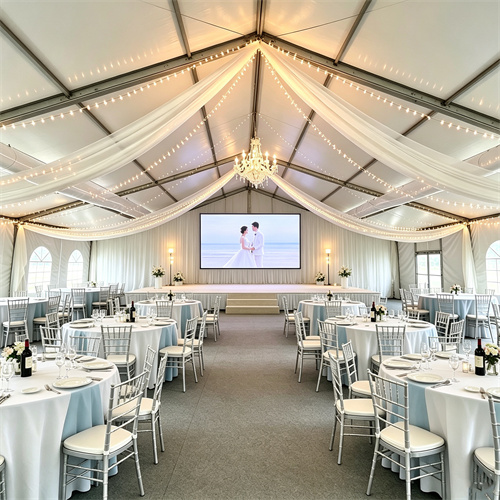
The gram‑weight of marquee PVC fabric indicates its weight per square meter, which is mainly determined by two key factors: the weaving density of polyester base fabric and the thickness of PVC coating. There is a positive correlation between fabric gram‑weight and service life, yet this is not a simple absolute proportional relationship. On the premise of identical production processes, UV‑resistant additives and anti‑mildew formulations, higher fabric gram‑weight delivers better physical strength and weather‑resistance margin, hence bringing a longer theoretical service life. However, the real service life of tarpaulins is jointly affected by multiple practical conditions including turnover frequency of assembly and disassembly, outdoor environmental conditions, daily maintenance and operation modes. Therefore, fabric durability cannot be judged merely by gram‑weight as a single indicator.
Polyester base fabric serves as the stress‑bearing skeleton of marquee tarpaulin, and it defines core performances such as tear‑resistance and puncture‑resistance. The 650g/㎡ marquee fabric features moderate‑density base cloth and light unit weight, which makes it well‑suited for repeated assembly and disassembly in short‑term rental projects. Nevertheless, when subjected to continuous pulling force from strong wind, or scratches caused by tree branches and metal components, tiny rips tend to emerge easily. Those cracks will keep expanding under external force and eventually lead to premature scrapping of the fabric. By contrast, 850g/㎡ heavy‑duty industrial‑grade tarpaulin adopts high‑density polyester base fabric. Its tensile strength, tear resistance and puncture resistance are improved remarkably. It can withstand greater external impact, greatly lower the probability of physical damage, and cut down comprehensive costs caused by fabric repair and replacement during project operation.
PVC coating provides protective functions including water resistance, UV‑ray blocking, mildew prevention and self‑cleaning effect. Higher gram‑weight is usually accompanied by thicker coating layers. In outdoor conditions, ultraviolet radiation, rain erosion and cyclic temperature difference between day and night will degrade PVC coating continuously. Once the coating gets aged, the fabric will suffer various failures such as hardening and brittleness, surface chalking, color fading and water seepage. The coating of 650g fabric is relatively thin; ultraviolet rays can penetrate the protective layer more easily and damage the inner base fabric, resulting in faster aging under direct sunlight exposure. Equipped with thicker PVC protective layers, 850g fabric can effectively slow down UV‑induced aging and chalking, and extend its service cycle under open‑air conditions.
According to practical industry references with qualified raw‑material formulas, 650g tarpaulin achieves an actual service life of 2‑4 years under frequent rental turnover. If deployed for long‑term semi‑permanent outdoor application, its service life will drop to 1‑2 years. Industrial‑grade 850g PVC tarpaulin can last 4‑6 years for rental turnover scenarios, and reach 5‑8 years in semi‑permanent projects with proper routine maintenance.
We should treat fabric gram‑weight objectively. Even high‑gram‑weight fabric will age rapidly without effective UV stabilizer. Frequent folding, assembling and disassembling create crease fatigue, which shortens the service span even for thick tarpaulins. Coastal salt spray, intense high‑temperature sunshine and heavy snow pressure will accelerate fabric wear and deterioration. When making material selections, 650g fabric is recommended for short‑term rental projects to keep overall costs within reasonable range, while 850g fabric shall be prioritized for semi‑permanent installations and regions with harsh weather. Apart from checking fabric gram‑weight during procurement, buyers also need to confirm UV‑stabilized treatment, anti‑mildew craftsmanship and warranty clauses so as to evaluate fabric quality from multiple dimensions.
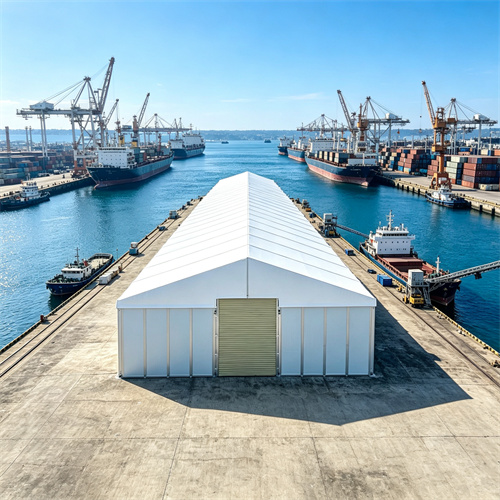 Key Differences Between Warehouse Tent and Traditional Warehouses
 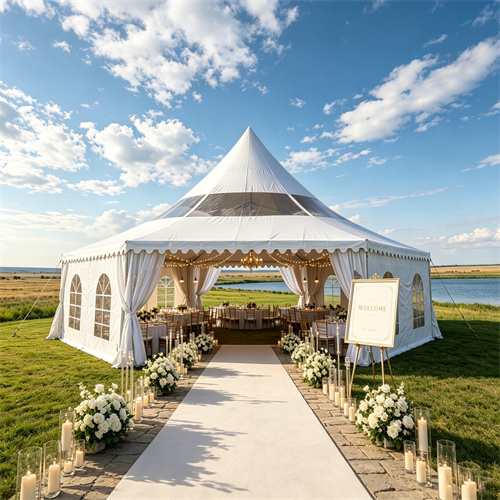 Core Differences Between Heavy‑Duty Marquee and Light Weight Marquee
 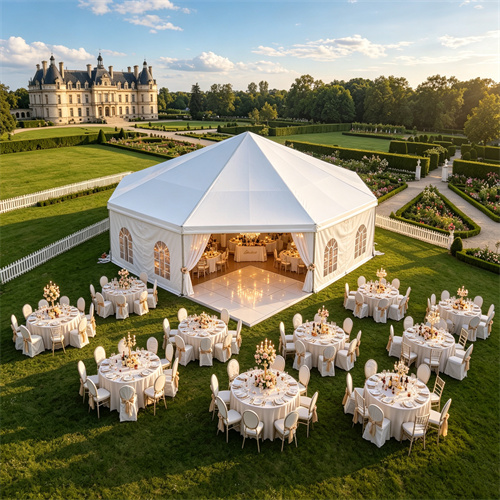 Characteristics and Applications of 850g and 650g PVC Tent Fabric
 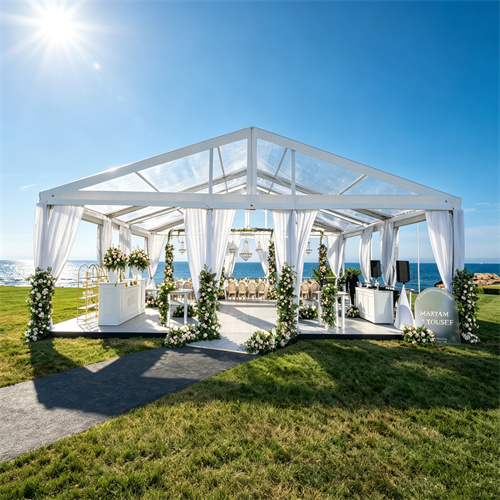 How to Keep Tent Cool and Sun-Safe in Summer?
 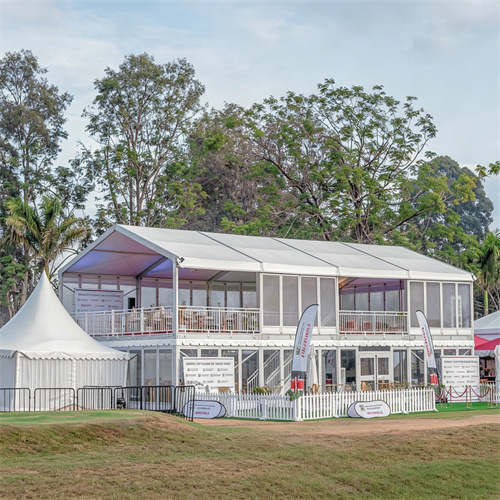 In Which Occasions Are Double-Decker Tents Suitable for Use?
 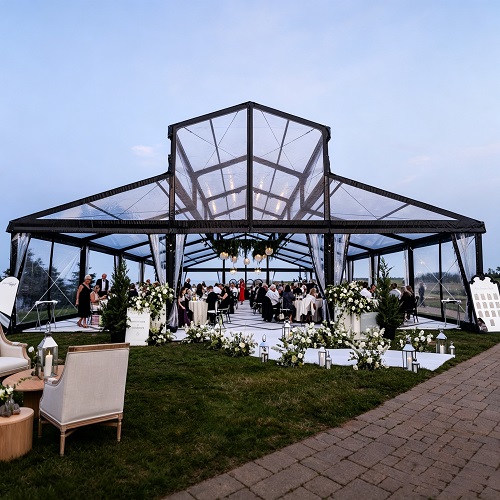 Guide to Marquee Tent Usage, Maintenance and Storage Under Various Weather Conditions
 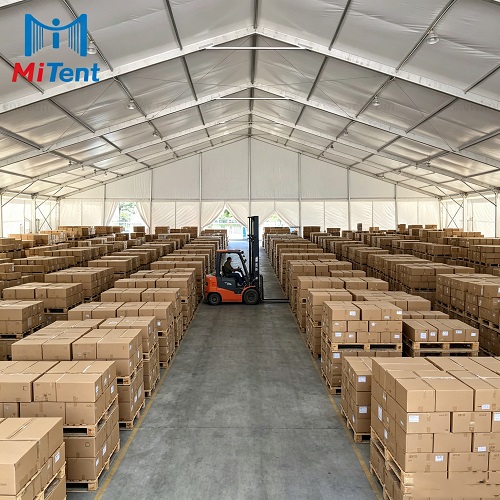 Features and Benefits of Warehouse Tents
  Features and Benefits of Full Transparent Tents
  How Should the Outdoor Tent be Maintained in Windy Weather?
  How To Choose A High-Quality Party Tent Suitable for Your Events
  How to Remove Snow from a Tent in Heavy Snow Weather?
  The Achievable Heights of Outdoor Marquees
  Decoration Techniques for Event Tents in Different Occasions
  Precautions for Setting Up Outdoor Tents
  Characteristics and Processing Differences between Transparent PVC and White PVC in Tent Products
  Advantages of Tents Made of Aluminum Alloy
  Key Investment Advantages of a Basketball Sports Tent
  The Double-Decker Tent: Elevating Event Spaces for Grand Occasions
  How to Choose a Warehouse Tent with Safety as the Top Priority
  The Use Site and Specific Purpose of PVC Aluminum Alloy Tents