
Characteristics and Processing Differences between Transparent PVC and White PVC in Tent Products
2026-05-15
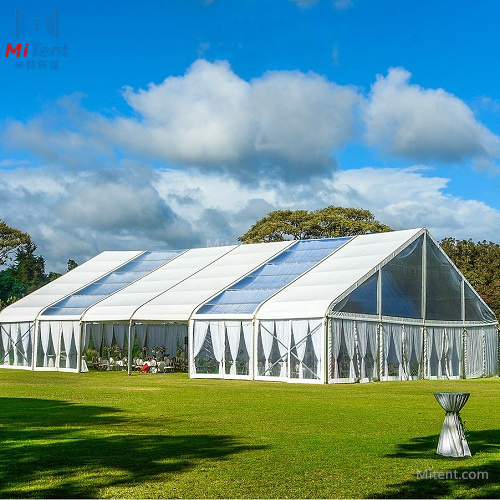
In the production of tent products, transparent PVC and white PVC are the two most widely used supporting materials. Due to differences in their formulas, there are significant differences in product characteristics and processing technologies, which directly affect the user experience, durability and production cost of tents. Clarifying the differences between the two is of great significance for the material selection, production and quality control of tent products.
The core feature of transparent PVC for tents is high light transmittance and good flexibility, which is suitable for transparent viewing windows, breathable covers and other parts that require visualization. Its formula is based on high-purity PVC resin, with almost no titanium dioxide, calcium powder and other fillers added, only a small amount of plasticizers and anti-aging additives. The light transmittance can reach more than 85%, allowing people inside the tent to clearly observe the outdoor environment, while ensuring a certain degree of waterproofness and airtightness. In addition, transparent PVC has a smooth surface and good fit with tent fabrics such as Oxford cloth and nylon cloth. However, its weather resistance is weak. When exposed to outdoor ultraviolet radiation for a long time, it is prone to yellowing and brittleness, and its tear resistance and wind impact resistance are not as good as those of white PVC. Moreover, its cost is relatively high, making it a special PVC material for tents.
The core features of white PVC for tents are strong hiding power, excellent weather resistance and high mechanical strength, which are mainly used for core protective parts such as tent outer tents, surrounding cloth and bottom cloth. Its formula adds a large amount of titanium dioxide (TiO₂) and an appropriate amount of calcium powder to the PVC resin, which not only achieves a completely opaque white appearance to play the role of shading and heat insulation, but also titanium dioxide can effectively block ultraviolet rays, delay material aging, and ensure that the tent is not easy to yellow and crack when used outdoors for a long time. At the same time, white PVC has high rigidity, good tear resistance and wind resistance, which can resist complex outdoor weather. It is low in cost and sufficient in supply, making it the most widely used general-purpose PVC material in tent production. It has good printing adaptability, and the solid color background can make tent LOGOs and patterns more bright, with strong ink adhesion, wear resistance and rain resistance.
The differences in their processing technologies mainly focus on the four core links of tent production: cutting, lamination, welding and printing. In the cutting link, due to the brittleness of transparent PVC, a high-precision CNC cutting machine is required to control the cutting speed and pressure to avoid burrs and cracks, especially for the special-shaped cutting of tent transparent windows; white PVC has high rigidity and can be cut with ordinary cutting equipment, with higher cutting efficiency, suitable for large-area cutting of tent outer tents and surrounding cloth, without excessive precision control.
In the lamination and welding link, transparent PVC needs to adopt a low-temperature heat sealing process (temperature controlled at 120-140℃) with special transparent heat sealing glue to ensure no obvious glue marks after lamination and no impact on light transmittance, while avoiding material yellowing and deformation caused by high temperature; white PVC can adopt a conventional high-temperature heat sealing process (temperature 150-170℃), with higher heat sealing strength and good airtightness after lamination, suitable for waterproof splicing of tent outer tents, and can be directly heat-sealed with tent fabrics without additional special glue, with higher processing efficiency.
In the printing link, transparent PVC needs to use UV transparent ink. Before printing, the surface needs to be corona treated to improve ink adhesion, and the printed patterns are mainly simple logos and lines to avoid blocking light transmittance; white PVC can use solvent-based or UV ink without complex surface treatment, and can be used for full-page printing and color pattern printing. After printing, the color saturation is high and it is not easy to fall off, suitable for the decoration and brand display of tent outer tents.
In summary, transparent PVC for tents focuses on light transmittance, requires more refined processing technology, and is suitable for transparent parts of high-end tents; white PVC focuses on durability and economy, has simpler processing technology, and is suitable for core protective parts of tents. In production, it is necessary to reasonably select materials and match the corresponding processing technology according to the positioning and use scenario of the tent, so as to balance product quality and production cost.
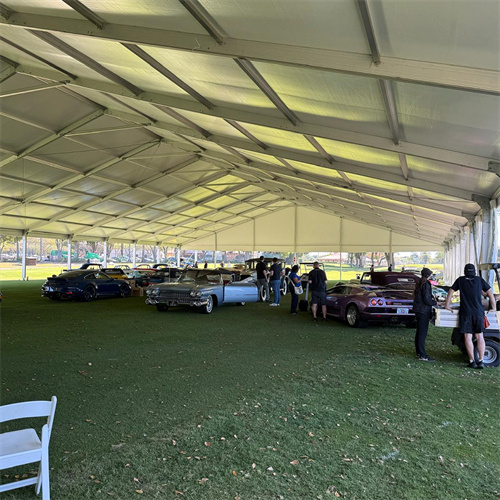 The Advantages of Exhibition Tents in Practical Applications
 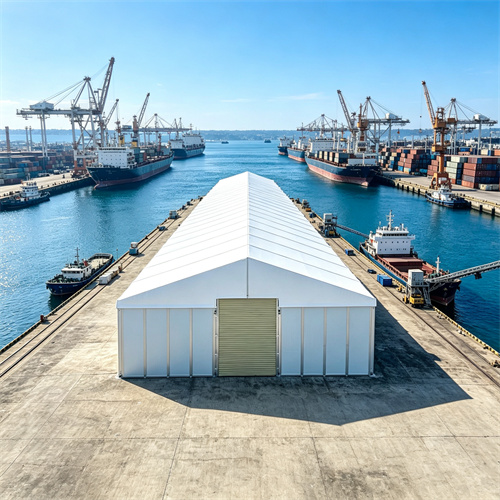 Key Differences Between Warehouse Tent and Traditional Warehouses
 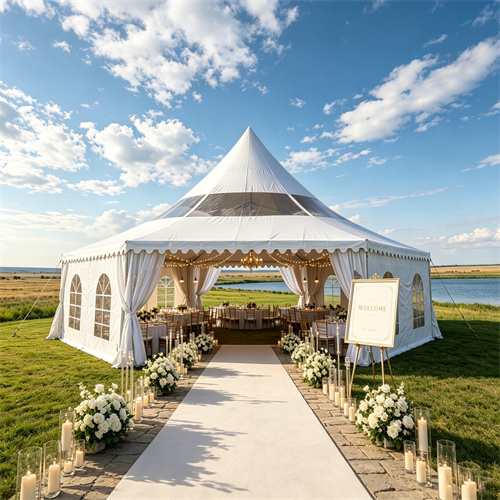 Core Differences Between Heavy‑Duty Marquee and Light Weight Marquee
 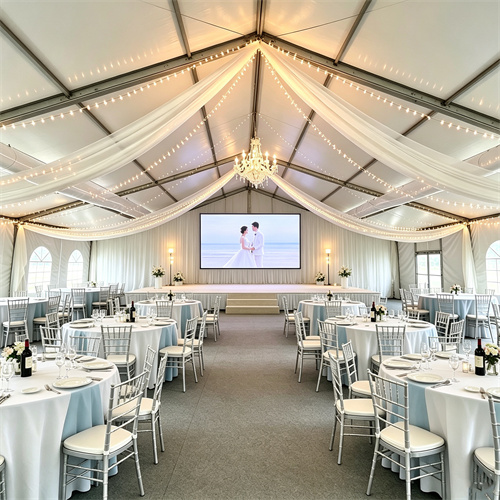 The Relationship Between Marquee Fabric Weight and Service Life
 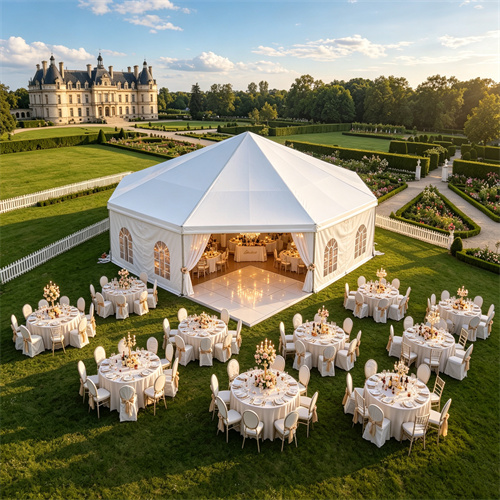 Characteristics and Applications of 850g and 650g PVC Tent Fabric
 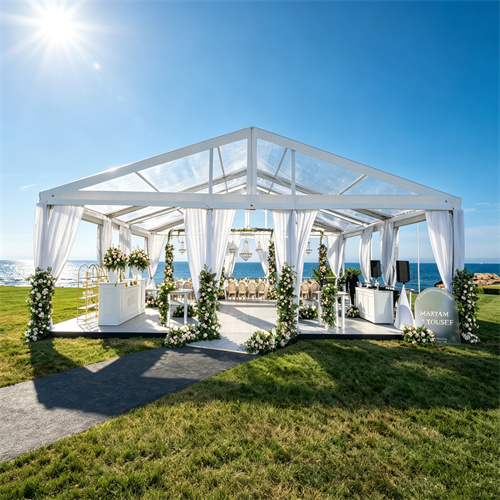 How to Keep Tent Cool and Sun-Safe in Summer?
 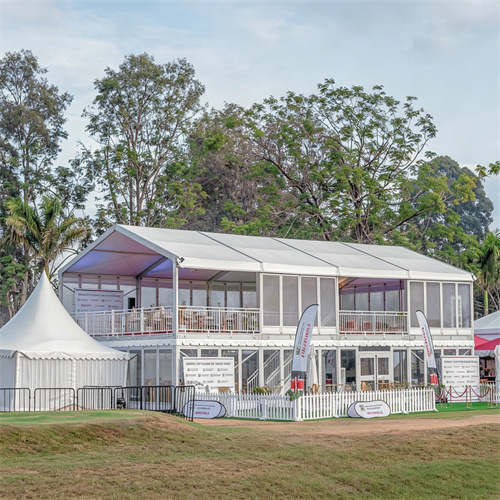 In Which Occasions Are Double-Decker Tents Suitable for Use?
  Guide to Marquee Tent Usage, Maintenance and Storage Under Various Weather Conditions
  Features and Benefits of Warehouse Tents
  Features and Benefits of Full Transparent Tents
  How Should the Outdoor Tent be Maintained in Windy Weather?
  How To Choose A High-Quality Party Tent Suitable for Your Events
  How to Remove Snow from a Tent in Heavy Snow Weather?
  The Achievable Heights of Outdoor Marquees
  Decoration Techniques for Event Tents in Different Occasions
  Precautions for Setting Up Outdoor Tents
  Advantages of Tents Made of Aluminum Alloy
  Key Investment Advantages of a Basketball Sports Tent
  The Double-Decker Tent: Elevating Event Spaces for Grand Occasions
  How to Choose a Warehouse Tent with Safety as the Top Priority