
Tent Maintenance and Snow Removal in Low-Temperature Conditions
2026-11-13
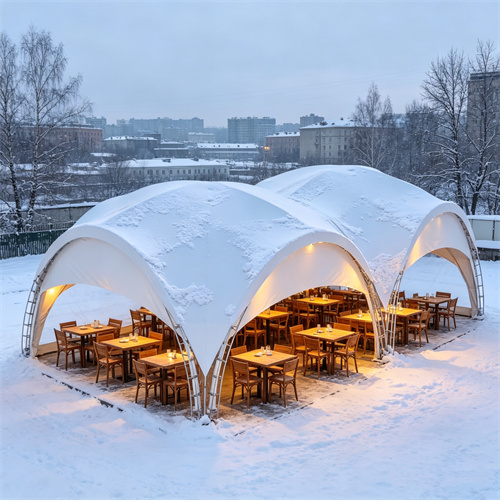
In snowy and frigid regions, snow load and low-temperature brittleness pose the biggest threats to tent fabrics and welded seams. Standard PVC tarpaulin loses flexibility below freezing point. Although low-temperature resistant fabric is formulated for cold climates, heavy sustained loading and improper snow removal can still result in tearing and seam separation. Scientific maintenance and snow-clearing practices are essential to extend tent service life and prevent collapse hazards.
The core principle of snow removal is to reduce load gently and avoid hard impacts. Never strike the tent surface with hard tools. The weight of accumulated snow continuously strains the fabric and heat-welded seams, which is the leading cause of tent damage. Snow removal should be carried out at an early stage, rather than waiting until the snow layer becomes excessively thick. Soft brushes, plastic scrapers and silicone pushers are recommended. Push the snow off slowly along the curved contour of the canopy. Do not hit or chip away compacted hard snow. Impact blows will create invisible micro-cracks on PVC material whose toughness has declined in cold weather. These hidden cracks will later develop into leaks and ruptures.
A proper snow removal sequence matters greatly. Clear snow from the roof first, then the side panels. Avoid removing a large amount of snow from only one side at once. Sudden uneven load release may distort the frame and tear the fabric under abrupt tension. If the snow turns into solid ice, do not pry it forcefully. Where available, a blower suitable for cold environments can be used to loosen the top snow layer. Otherwise, wait for a slight temperature rise until the ice loosens naturally. Never step on the canopy during cleaning. PVC fabric has weaker puncture resistance at low temperatures, and ice shards or shoe soles can easily pierce the coating.
For routine low-temperature maintenance, moisture control and ventilation are priorities. A large temperature difference between the inside and outside of the tent generates plenty of water vapour from breathing and heating. The vapour condenses and forms frost and ice on the inner side of the tarpaulin. The inner ice adds extra weight; repeated friction from ice crystals also accelerates plasticizer migration and coating degradation. Open the tent door for ventilation when the temperature permits during daytime to lower internal humidity. Before packing away, sweep and wipe off all snow and ice on both sides of the fabric. Folding the tent with ice residue trapped inside will abrade the PVC coating and create permanent stress creases.
After each snow clearance, inspect high-stress areas carefully: heat-welded seams, webbing attachment points and corner sections. These zones bear concentrated force and are most prone to failure in cold weather. Watch for whitish marks and fine creases on the fabric surface; whitening is an early warning sign that the material toughness has been compromised. Check guy lines and ground stakes regularly. Frozen ground contracts at low temperatures, which loosens stakes. Combined with wind and snow load, loose anchorage can lead to structural instability.
Pay attention to storage procedures as well. Do not use high-temperature heating to melt ice rapidly right after use. Sharp temperature swings will aggravate plasticizer bleeding and speed up ageing. Allow ice to melt naturally and ensure the fabric is fully dry before storage. Long-term storage under stretched conditions is preferred to avoid fixed fold lines.
In conclusion, prevention is more important than repair for tent management in cold seasons. Timely and gentle snow removal to balance structural load, adequate ventilation for dehumidification and regular inspection of critical connection points help the low-temperature resistant fabric perform as designed. These practices effectively prevent collapse, fabric brittleness and seam failure, and reduce end-user quality complaints for exported tent products.
 The Complete Process of Tent Installation
 Why Temporary Tents Are Ideal for Ice and Snow Sports Events
 The Advantages of Exhibition Tents in Practical Applications
 Key Differences Between Warehouse Tent and Traditional Warehouses
 Core Differences Between Heavy‑Duty Marquee and Light Weight Marquee
 The Relationship Between Marquee Fabric Weight and Service Life
 Characteristics and Applications of 850g and 650g PVC Tent Fabric
 How to Keep Tent Cool and Sun-Safe in Summer?
 In Which Occasions Are Double-Decker Tents Suitable for Use?
 Guide to Marquee Tent Usage, Maintenance and Storage Under Various Weather Conditions
 Features and Benefits of Warehouse Tents
 Features and Benefits of Full Transparent Tents
 How Should the Outdoor Tent be Maintained in Windy Weather?
 How To Choose A High-Quality Party Tent Suitable for Your Events
 How to Remove Snow from a Tent in Heavy Snow Weather?
 The Achievable Heights of Outdoor Marquees
 Decoration Techniques for Event Tents in Different Occasions
 Precautions for Setting Up Outdoor Tents
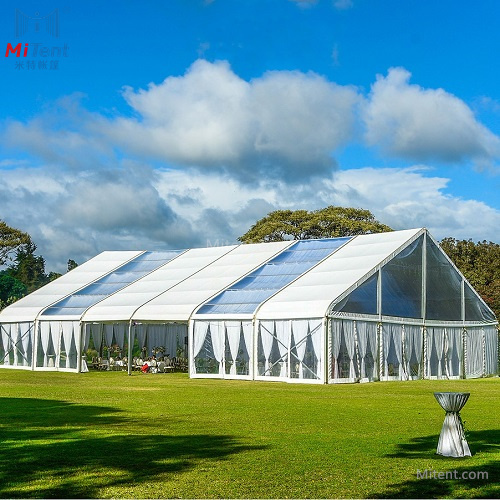 Characteristics and Processing Differences between Transparent PVC and White PVC in Tent Products
 Advantages of Tents Made of Aluminum Alloy